

IMET® Floating Islands (IFI) and IMET Treatment Modules (ITM) support algae management, water clarity, and ecological recovery in ponds, lagoons, canals, and other impaired water bodies.
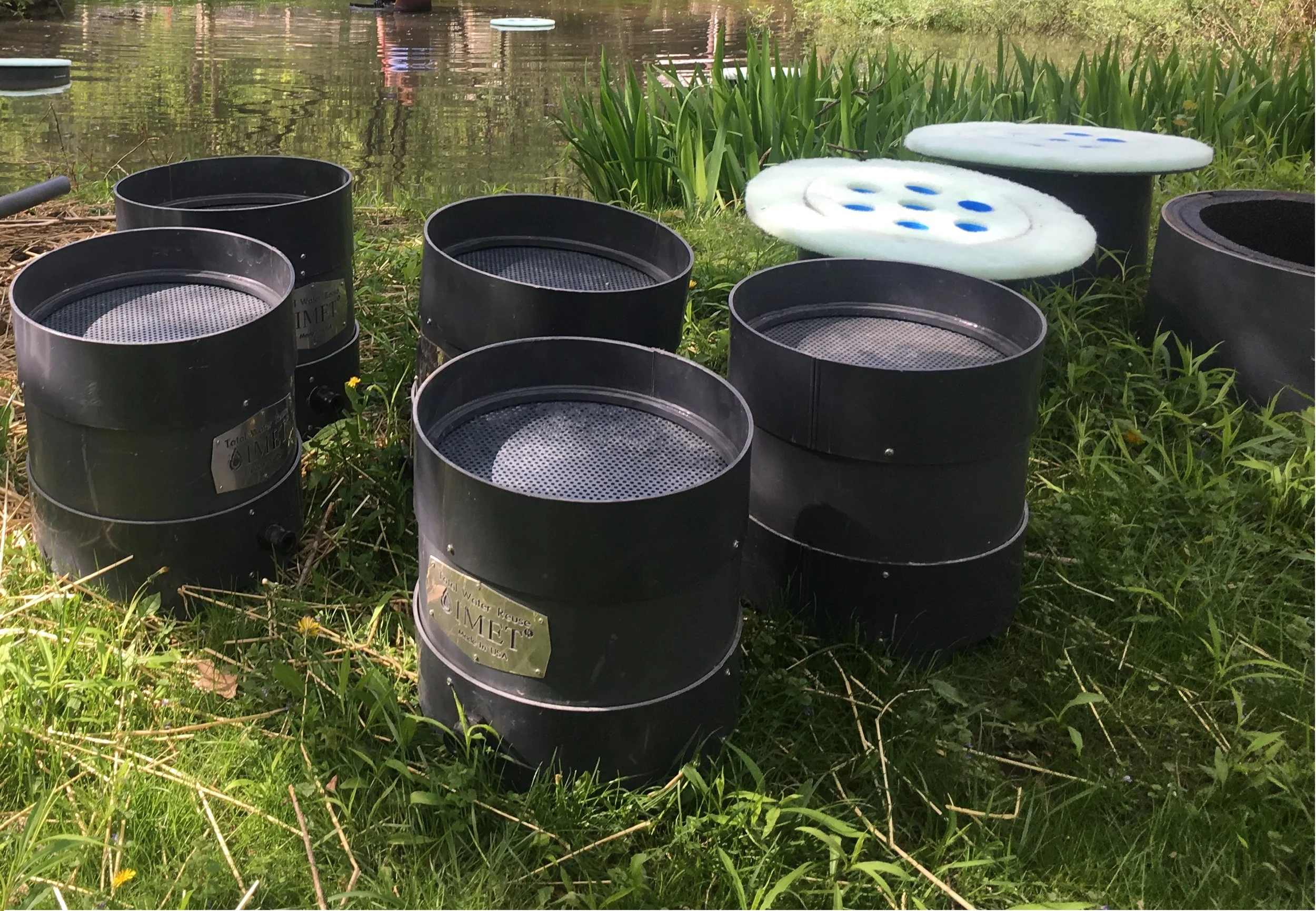
IFIs provides a living platform for aquatic plants, helping support nitrogen and phosphorus uptake while creating habitat for microbial, plant, and animal life. Beneath and within each island, high-surface-area media supports diverse aerobic microbial growth.
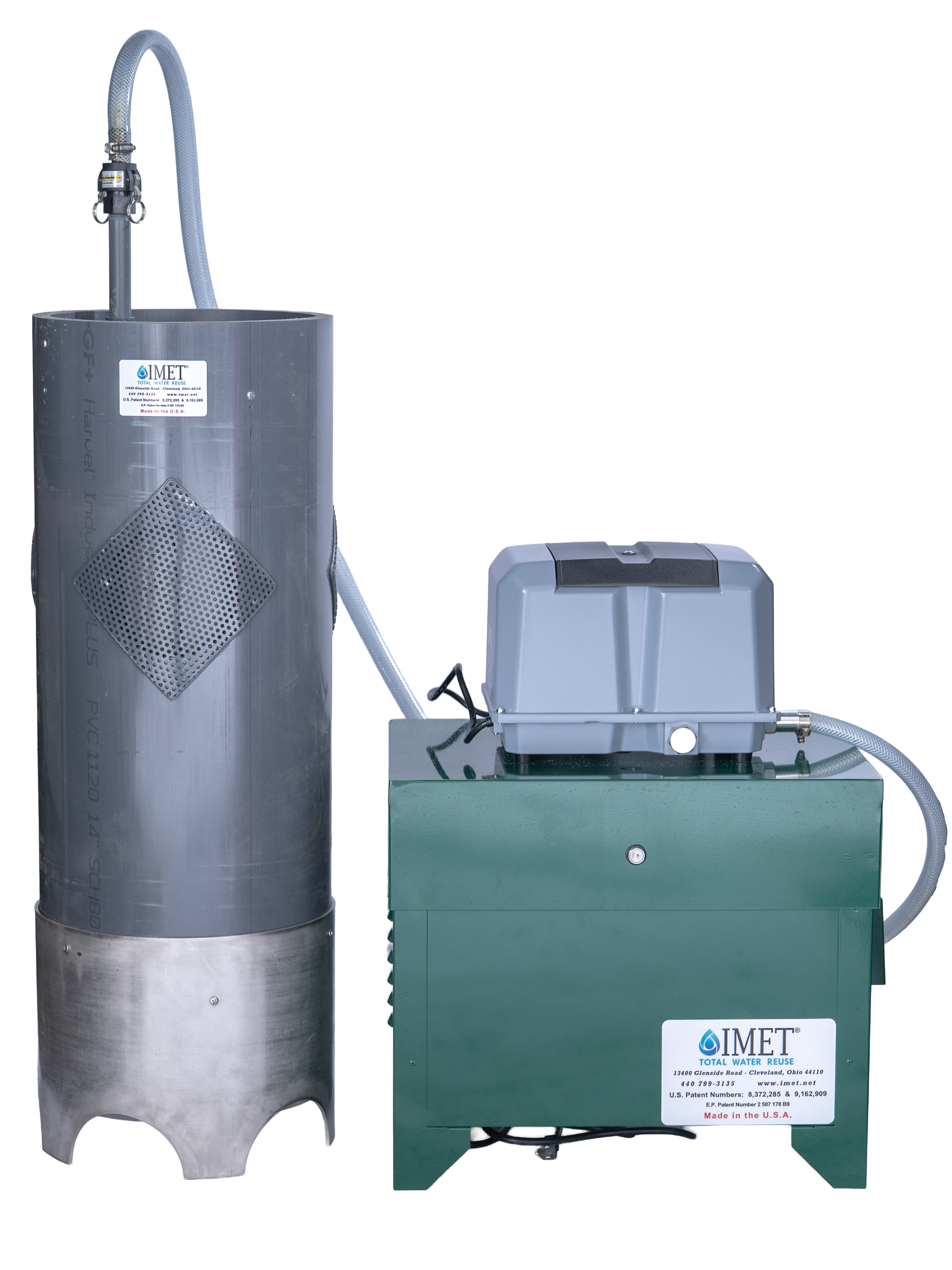
ITMs add an additional layer of active biological treatment. Installed directly into the water body or surrounding treatment system, the modules help create aerobic conditions and support microbial utilization of biological oxygen demand (BOD), chemical oxygen demand (COD), ammonia (NH₃), nitrate (NO₃), nitrite (NO₂), and other nutrient and organic loading pressures.
Together, the two technologies help shift impaired water bodies away from algae-dominant imbalance and toward a healthier biological system with improved clarity, stronger aerobic activity, and more diverse plant and animal life.
Key Benefits
High-surface-area multimedia supports diverse aerobic microbial growth
Aquatic plant pods support nitrogen and phosphorus uptake
ITM performance resistant to pH and temperature variations
Addresses conditions that contribute to algae dominance
Supports improved water clarity and ecological balance
Reduces odor associated with anaerobic water conditions and nutrient imbalance
Can be incorporated in new, existing, or site-specific waterway recovery systems
Modular design allows treatment approach to be scaled by site need
The IMET® technology provides superior surface area that allows large, diverse populations of micro-organisms to grow and remain in the IMET® module. Coupled with superior aeration, and a design that utilizes aeration efficiently, the IMET® technology requires less air to achieve maximum results. In waterway recovery and algae management applications, this supports a more stable aerobic environment and helps restore the biological conditions associated with healthier waterways.
System:
Modules sized to meet site specifications and requirements
Adaptable for wastewater treatment systems, ponds, lagoons, canals, and waterway-adjacent recovery applications
Proof in Action: Cleveland Metroparks Zoo
Algae Management and Waterway Recovery
IMET® Aqua Module
IMET® Floating Island



Looking to improve ecological health and reduce algae dominance?
Case Study: Cleveland Metroparks Zoo
Before
After
Context: In 2018, IMET Corporation and the Cleveland Metroparks Zoo worked together to showcase the IMET technology in one of its prominent ponds in its Australia exhibit. Surrounded by grass, trees and shrubs, the pond at the Australia exhibit provides kangaroos, black swans, and magpie geese with a source of drinking water, as well as a place to play and swim. For the patrons of the Cleveland Metroparks Zoo its pond is designed to create a beautiful backdrop for zoo guests walking through the exhibit.
Problem: The Australia pond, although functional, had experienced a change visually by way of significant algae growth and a lack of water clarity. The pond water was a grey color, with a green hue during prime zoo-going seasons due to the algae growth on the surface. IMET was brought in to help change the balance in the water body using microbiology and plant life by utilizing nitrogen and phosphorus to disrupt algae growth while promoting the growth of other plant and animal life in the pond.
Solution: On the day of installation in mid-May, the IMET team walked the pond, installing five floating islands with pods for aquatic plants to aid in the nitrogen and phosphorus uptake. Along with the plants, each floating island was filled with high surface area multimedia to promote aerobic microbial growth, to further aid in the utilization of total nitrogen (ammonia, nitrate, nitrite) and phosphorus in the water. Additional to the floating islands, the IMET team also installed five IMET biological reactors to further microbiologically treat the pond water. Like the floating islands, the IMET biological reactors house different types of multimedia with varying surface characteristics to promote the growth of diverse aerobic micro-organisms in the pond.
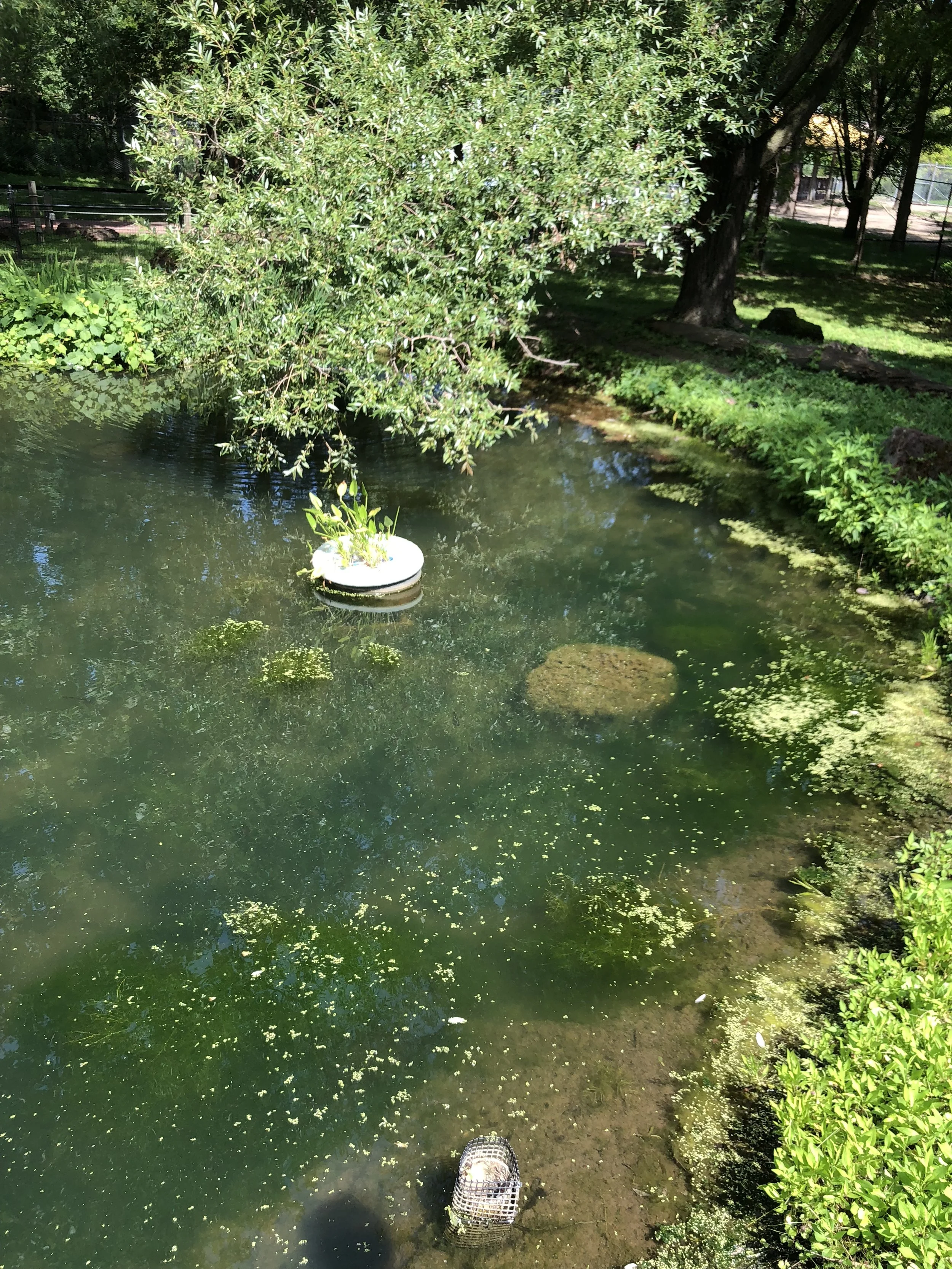
Results: Soon after the IMET team and the zoo staff planted the floating islands, further change became visible in the pond. Water clarity became nearly 100%, schools of fish could be seen swimming throughout the pond, and different types of plant life were flourishing throughout the water body. The algae that had been prevalent in years past was no longer visually the dominant species in the pond. A healthy pond system was achieved with a natural balance of plant and animal life.
The IMET system is designed with nature in mind, mimicking natural healthy systems like lakes, rivers and ponds by helping create balance between microbiology, plant and animal life in a water body. When installed, the IMET technology enables nature to help right itself, shifting the natural balance from a single species like algae, by consuming some of the nitrogen, dissolved carbon, and phosphorus in the water body that enabled one species to prosper over another.
Because nature is so adaptive, once the balance has shifted, other plants, and animals that are natural to the area can find a way to flourish in the water body. In the case of the Australian pond, at the Cleveland Metroparks Zoo, the fish population grew rapidly, and the plant life under the water exploded, as the water got clearer and more light was able to penetrate the water’s surface.